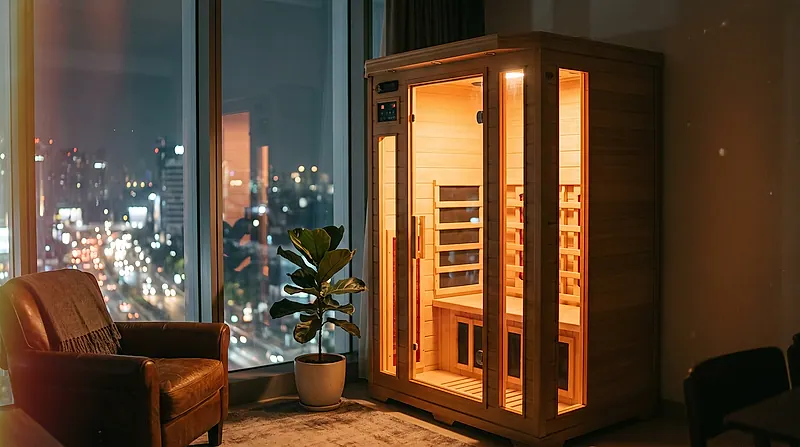
An infrared sauna for one or two people runs on 1.7–2.4 kW at an air temperature of 45–60°C, so in most Jakarta apartment units it needs no PLN power upgrade. Indicative price IDR 30–70 million installed, and assembly inside the unit takes 1–2 days once management approval is out. No water, no steam, and no chasing walls.
Why infrared, not a dry sauna, in an apartment
A 6–9 kW dry sauna heater demands a 7,700–11,000 VA connection, while an apartment unit's power is usually locked by the building and rarely upgradeable. An infrared cabin uses carbon panels that warm the body directly rather than heating the air to 90°C — which is why the draw is small. The sensation differs: the air feels lighter, the sweat comes slower but deeper, and there's no water over stones. If you're after classic dry heat, our honest comparison is in the article on sauna types: dry, steam or infrared.
Where the cabin fits in your unit
A one-to-two person cabin takes up roughly the space of a large wardrobe. The spots we use most: a rarely occupied guest room, a walk-in closet, or a corner of the study. The cabin stands on the existing floor with no drainage needed, and one dedicated socket on its own circuit from the unit's panel is enough. In penthouses and large units, the cabin can sit near the master bathroom so the post-session rinse doesn't cross the living room.
Building management approval: what we prepare
Management usually asks three things: how much power it draws, whether there's wet work, and when the team works. For infrared the answers are simple, and we assemble the file — unit specs, electrical load, assembly method, a schedule matching renovation hours. The cabin panels go up in a standard passenger lift. The full guide to the approval route is in our article on saunas in Jakarta apartments.
Unit electrics and safety
Small draw or not, the cabin still gets its own MCB and ELCB rather than piggybacking a bedroom socket. The control panel has a timer that shuts the cabin off automatically after a session, and the interior surfaces stay safe to touch. Before ordering, we check a photo of your unit's electrical panel: some older apartments along the Sudirman corridor still run small panels that need reorganising so the cabin, AC and kitchen can work at the same time.
How to use an infrared cabin at home
Because the air is cooler than a dry sauna's, infrared sessions tend to run longer — many users sit for 20–30 minutes, stepping the temperature up gradually over the first weeks. Drink water before and after, step out if you feel light-headed or dizzy, and rinse off afterwards. The cabin can go on as you get home from work with no long wait; the carbon panels feel warm within minutes. If you have a heart condition, blood pressure issues or are pregnant, talk to your doctor before starting a heat routine.
Maintenance: light but regular
An infrared cabin has no stones, water or pumps, so upkeep is simple: wipe the bench and backrest after use, leave the door open briefly so the sweat dries off, and never spray water at the heating panels. Once a year we recommend a check of the cable connections and control panel, which can be scheduled with one of our service visits.
Price and monthly running costs
| Item | Indicative |
|---|---|
| Infrared cabin for 1–2 people, installed | IDR 30–70 million |
| Electricity and light upkeep | IDR 100–250K / month |
| Assembly time in the unit | 1–2 days |
Indicative figures; panel class, timber and cabin size move the price. The comparison with our other products is on the Jakarta sauna pricing page.
Apartment districts we handle most
The Sudirman–Thamrin and Kuningan corridor (Central Jakarta), apartments around Kemang and Cilandak (Kemang), towers in PIK and Pluit (North Jakarta), and the big complexes in Puri and Taman Anggrek (West Jakarta). The free survey applies across DKI.