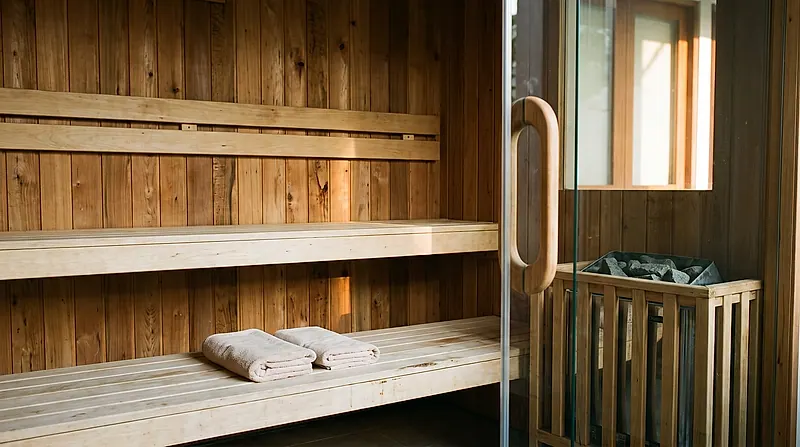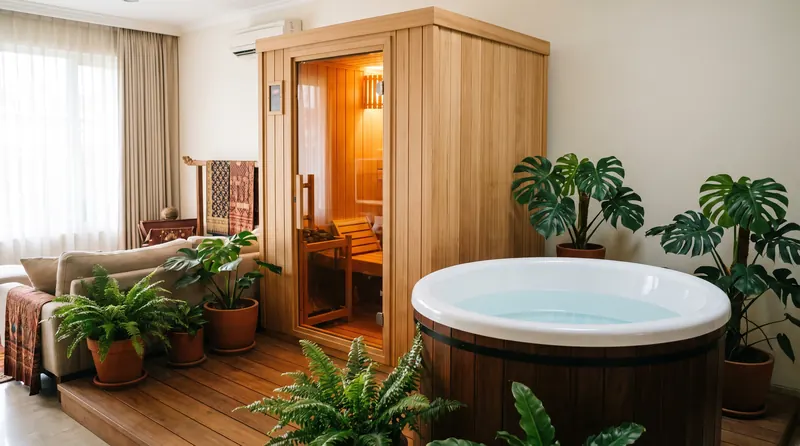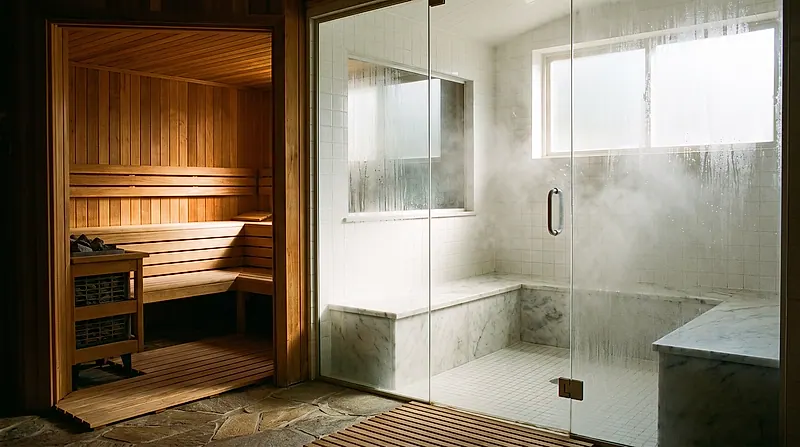
The sauna benefits with the strongest evidence sit in four areas: heart and vascular health, sleep quality, muscle recovery after exercise, and stress reduction. The basis isn't testimonials — it's, among others, Finnish cohort studies that followed thousands of men for decades and found a link between sauna frequency and lower cardiovascular risk. Below we unpack what happens to the body at 80°C, which benefits you can reasonably expect, and which deserve lowered expectations — written from the viewpoint of a city whose stress needs no explaining.
What happens to your body at 80°C
The moment the cabin door closes, your core temperature starts rising and the cardiovascular system goes to work: skin blood vessels dilate, heart rate climbs to 100–150 beats per minute — on par with brisk walking or light jogging — and blood flow to the skin multiplies. Sweat pours out to shed heat; in one 15-minute session the body can release half a litre of fluid. The interesting part comes after: when you step out, the nervous system swings into parasympathetic mode — "rest and recover" — and that's where most of the post-sauna glow comes from.
Repeated heat exposure also triggers adaptation: the body cools itself more efficiently, vessels grow more responsive, and protective heat shock proteins increase. It's this adaptation — not one magic session — that's thought to be the mechanism behind the long-term findings.
Heart and blood vessels: the strongest evidence
The most-cited cohort study from eastern Finland found that men who took saunas 4–7 times a week had a far lower risk of cardiovascular death than once-a-week users, in a neat dose-response pattern. Follow-up studies link the sauna habit to healthier blood pressure and more supple vessels. The mechanism makes sense: a heat session is light "training" for the heart and vessels, something like low-dose cardio done consistently.
The honest footnote: these are observational studies in a population with a lifelong sauna culture — they show a strong association, not an individual guarantee. But the direction of the evidence is consistent, and strong enough that preventive cardiology has started including saunas in lifestyle conversations.
Sleep: the benefit Jakarta feels fastest
Of all the sauna's effects, the one our clients report most in the first week is sleep. The mechanism is elegant: deep sleep is triggered by a falling core temperature — and an evening sauna session creates a sharp temperature "cliff" once you step out and the body cools. The result: drowsiness arrives sooner, and the share of deep sleep grows.
For Jakartans getting home at eight with their head still in the work group chat, a 15-minute session before the shower is a transition button that works physiologically, not just by suggestion. The best session for sleep: 1–2 hours before bedtime, moderate heat, no devices in the cabin.
Muscles, DOMS and the day after training
Heat boosts blood flow to the muscles, helps flush metabolic by-products, and loosens stiff tissue — which is why a sauna feels right after a weights session or a long run. The DOMS (delayed-onset muscle soreness) research shows heat can reduce perceived soreness and speed the return of range of motion, though the effect is moderate, not magic.
The more interesting combination for recreational athletes is alternating heat and cold — contrast therapy — which adds cold vasoconstriction as a second "pump". It's why many of our clients end up installing a sauna and ice bath together.
Skin, "detox" and things that need straightening out
What's real: heavy sweating clears the pores, increased skin blood flow brings a fresh colour, and many users report improved skin texture with regular use. What's myth: "sweating out toxins" — your detox organs are called the liver and kidneys; sweat is 99% water and electrolytes. Nor is a sauna a weight-loss device (see the FAQ), and the claim of "600 calories burned per session" doesn't survive inspection.
We write these limits down precisely because we sell saunas: correct expectations keep owners happy for years; magical expectations turn a unit into a towel rack within three months.
City stress: hard to measure, easy to feel
One benefit rarely makes the journals but always makes the client stories: the sauna cabin is one of the few places in Jakarta notifications can't follow you into. Fifteen minutes without a screen, with heat forcing your attention back to breath and body — functionally that's meditation, with a physiological trigger that makes the relaxation independent of willpower.
This ritual is what we design for when we build: warm, dimmable lighting, a bench comfortable enough to lean back on, and — if you want to go further — cold water beside it for the contrast that makes the head truly quiet. The same need is now creeping into working life: a number of companies and members' clubs are adding hot rooms for their teams and partners — the spec is in our article on saunas for Jakarta business clubs and offices.
How to start at the right dose
For healthy people: start with 2 sessions a week, 10–15 minutes at 70–80°C, a glass of water before and after, and step out at the first hint of dizziness. Raise the frequency by feel — the Finnish data favours 4+ sessions, but a consistent 2 beats an ambitious 7 that stops in week three. The medical limits are in the FAQ below; if you have a chronic condition, one doctor's consultation settles the doubt.
And if this article has you thinking "my house needs one" — start by choosing the sauna type that fits your home, or just send photos of the room to our sauna building team via WhatsApp: the survey and cost estimate are free across DKI Jakarta.