The right way to start ice baths fits into three numbers: 12–15°C, 1–2 minutes, two or three times a week. From there you lower the temperature gradually until you find your zone — most people settle at 5–10°C for 2–3 minutes. The rest is breathing technique, patient progression and a few safety rules that can't be skipped. This guide lays it all out in order, from the team that installs cold plunges in Jakarta homes and has stood beside plenty of first dips.
Why cold — and why in a hot city of all places
A fair question: Jakarta is 33°C — why pay to be cold? Because cold water's effect has nothing to do with the weather. When the body enters water below 15°C, a sequence starts that no ordinary shower can imitate: peripheral blood vessels clamp down hard, blood is pushed to the core, noradrenaline spikes — delivering an alertness and mood lift that lasts for hours — and after you climb out, returning blood floods the muscles like a pump opening.
In practice, regular users chase three things: muscle recovery that feels faster after hard training, a head that switches on fresh in the morning, and mental practice at facing discomfort which — this sounds philosophical but is real — makes daily stress feel smaller. Precisely because Jakarta is hot, 8°C water in the morning is the sharpest contrast money can buy.
A four-week starting progression
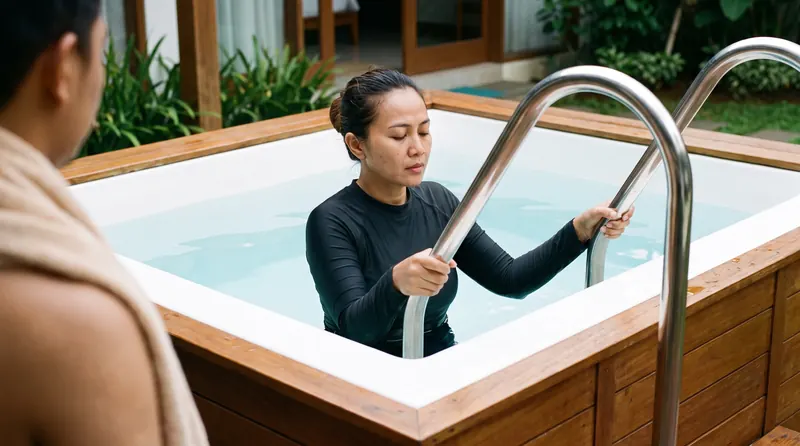
Week 1 — introductions: 15°C, 1–2 minutes, 2–3 sessions. The only goal: get in, control the breath, climb out calm. Not a record. Week 2 — steady: 12–13°C, 2 minutes. The initial shock starts feeling familiar; focus on keeping the shoulders relaxed in the water. Week 3 — dropping: 10°C, 2–3 minutes. This is where most people find their rhythm: the cold still challenges, but you're the one in control. Week 4 onward — your zone: 5–10°C, 2–3 minutes. Some stop at 10°C forever and get all the benefits; some chase 5°C. Both are right — the best temperature is the one that brings you back tomorrow.
The golden rule of progression: lower the temperature OR extend the duration, never both in the same week.
Breathing: the one mandatory technique
The body's reaction to ice water is called cold shock: a reflex gasp, racing breath, a leaping heart rate. The reaction is normal, peaks in the first 30 seconds, and can be "ridden" with one technique: the long exhale. Before getting in, two or three calm deep breaths. As you enter, exhale long through the mouth — longer than the inhale — and keep going: in for four counts, out for six to eight. Within half a minute the nervous system gets the message that you're safe, and water that was "impossible" becomes merely very cold.
What's off-limits: breath-holding, hyperventilating before entry (dangerous), or dunking the head in the early sessions. Head above water, long exhales, eyes open — that's the beginner protocol we teach at every unit handover.
The five beginner mistakes we see most
Starting too cold. 5°C water for a first dip ends one of two ways: a panicked exit within ten seconds, or holding on with a trauma that kills the habit. Start at 15°C. Staying too long. "If 2 minutes is good, 10 must be great" — no; past 5 minutes the risk climbs and the benefit barely grows. Jumping straight into a hot shower afterwards. Light post-session shivering is part of the process (the body reheating itself); give it 10–15 minutes before warm water. Going solo in week one. Not because of great danger — because company keeps you calm and consistent. Neglected water. An unfiltered tub turns into bacterial soup within a week; it's why our cold plunges always ship with filtration and ozone/UV installed.
Safety: the lines you don't cross
Ice baths are safe for healthy people who progress gradually — and dangerous for certain conditions. Don't start without talking to a doctor if you have: a heart condition or arrhythmia, uncontrolled hypertension, epilepsy, Raynaud's syndrome, or a pregnancy. Never after alcohol. Never compete on duration with anyone. And set a clear exit line: the moment the shivering turns heavy or your fingers start going numb, the session is over — the ice water will still be cold tomorrow.
Equipment at home: from bucket to system
You can start without buying anything: a bathtub plus 15–20 kg of supermarket ice delivers an honest first experience. If the ritual sticks, run the economics — regular ice two or three times a week in Jakarta's heat burns through a chiller's price within months, hassle not included. A permanent system — a lined tub, a ½–1 HP chiller holding the target temperature 24 hours a day, filtration — installs in the IDR 45–90 million range and turns the ice bath from a project into a habit: the water is always ready, you just get in.
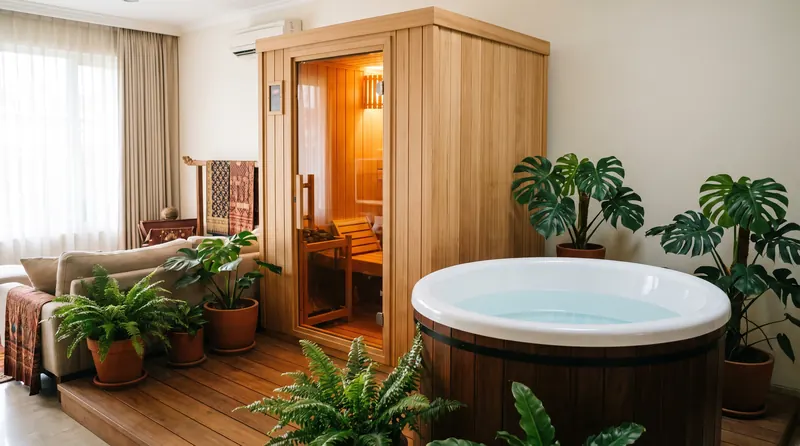
And once the cold is routine, the next step nearly all our users take: adding heat beside it. The sauna–plunge combination opens up contrast therapy — the alternating hot-cold protocol whose effect outgrows either one alone — and our package installs as a single room. Questions about placement at your home — patio, rooftop, bathroom — get answered free via a WhatsApp survey anywhere in DKI Jakarta.
Read next: A quiet ice bath chiller: taming the noise for Jakarta apartments and townhouses.
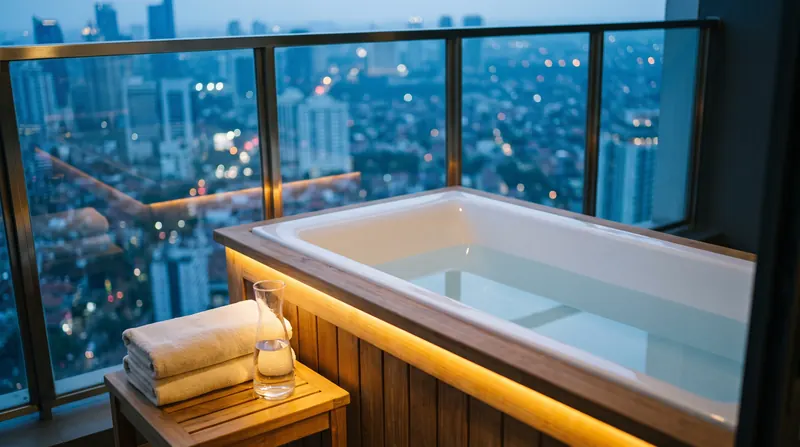
An ice bath at your Jakarta home: a 3–15°C chiller. The protocol above is easiest to keep with a tub whose temperature is stable every day. We install timber tubs with chillers in homes, on rooftops and on apartment balconies — specs and prices on the Jakarta ice baths.